Planning a pipe cleaner flower kit: from prototype to component list
Build one repeatable flower, count materials by color and design instructions before scaling a kit.
Practical sourcing notes · AI-assisted editorial
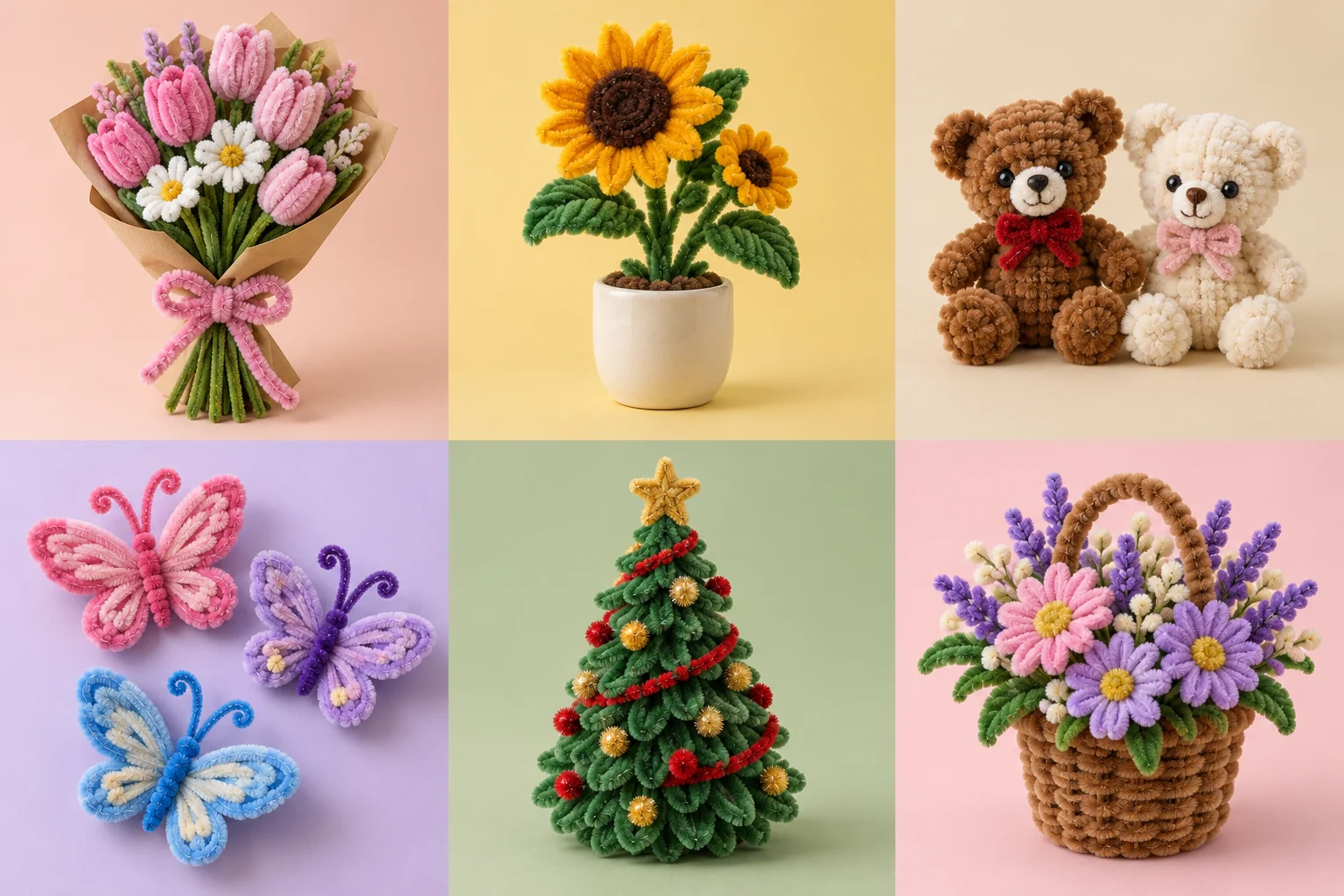
A beautiful bouquet photograph is a useful mood reference, but it is not a bill of materials. A kit needs to help another maker reach a similar result using a defined set of components. Begin with one flower, record the steps and test the instructions before planning a larger assortment. The goal is a repeatable project with understandable quantities, not an untested promise that every beginner will reproduce a display image.
1. Choose one flower and one scale
Decide whether the first project is a single tulip, a daisy or a small mixed bouquet. Define the approximate finished height and petal size using a physical prototype. Try the selected stems at that scale: extra bulk may help a large petal but make a tiny center difficult to form. Keep the successful prototype and photograph its front, side and attachment points so the next sample has an identifiable reference.
2. Count components by color and step
Write a component list for petals, center, leaves, stem and wrapping. Record both the number of full stems supplied and the cut pieces used in each step. If a prototype uses half a stem for a leaf, explain how cutting is handled and where the remainder goes. Repeat the build before deciding any spare allowance. Packaging, ribbon, adhesive and tools should appear as separate entries rather than being silently included in the stem quantity.
3. Test the instructions with a new maker
Ask someone who did not develop the prototype to follow the draft instructions. Observe where they need an extra image, a measurement or a clearer sequence. Identify tools explicitly and plan appropriate adult handling of cutting, adhesive or exposed wire ends. Avoid age-suitability claims until the actual kit and its labeling have been reviewed for the intended market. An instruction test helps improve the project, but does not replace required product assessment.
4. Design packing around the tested project
Group components so the maker can identify colors and quantities without guesswork. Check that packing does not flatten the fibers needed for the final flower. Distinguish a material kit from a finished bouquet in the title, images and component list. If the hero image is an AI-generated concept, say so and use a verified physical prototype for pack counts. Before scaling, approve the material list, instructions and packing together as one version.
The practical takeaway
A dependable kit starts with a tested build: one prototype, a color-by-color component list, clear instructions and a matching packing sample.
Further reading
Application images are AI-generated concepts. Product specifications, availability, testing, prices and delivery terms require confirmation for the actual order.
← Back to journal